Livliga® Live Vibrant Blog: Psychology of Eating

Showing posts with label Psychology of Eating. Show all posts

Why Livliga Works—It’s the Best Value for Our Money and Our Health

Friday, August 21, 2020
MMcDonalds Supersize Fry Big vs. Small  Package


We all know it and struggle with it. Overeating is an everyday reality. We live in a super-sized world. Even worse, we have been programmed over our lifetime to believe that more is better and that the better deal is getting more for the money we pay, especially when it comes to food. “What makes those larger sizes even more troublesome is that they’re marketed and sold as bargains. When people learn to equate massive amounts of food with a good deal, it becomes an even more Herculean task to change their behavior,” says Diane Ty, Portion Balance Coalition Project Director from Georgetown University Business School in a recent Quartz article. Another problem is that the value we get for our money is equated with quantity, not quality…and it is killing us. More is not better when it comes to the consumption of food.

In reality, more is often given to us at the cost of quality. And of even greater concern is that we are programmed to eat what is in front of us. Huge portions amount to huge meals that add on pounds that ultimately affects our health. As New York University nutrition science professor Marion Nestle has put it, “larger portions encourage people not just to eat more, but to underestimate how much they’re eating. It’s as much a mental game as it is a mathematical one.”

Large Portion of an over sized greasy burger versus a normal serving size of a burger on Livliga's tableware


As is becoming apparent, in order to change our behavior we will need to change our culture. More is not better when it comes to food. Amounts do matter. A portion is not the same as a serving size. Food corporations, restaurants, grocery stores convenience outlets and even our homes will need to right size their offerings so all of us can become aware of right sized amounts. Currently we have no idea what right-sized servings look like. Our only frame of reference is super-sized portions.

How do we get started? Where we have the most control…our homes. And there is no better time than today to begin. When you listen to the successful weight loss stories on TV or read them in a magazine what do all those individuals say? Every single one has changed their food environment. They swapped out healthier foods for the less healthy ones, they planned ahead, they measured what they ate and they changed how they spend their time, fitting in exercise and healthier activities. 

As most will agree, losing weight and living a healthy lifestyle long term is more a mental game than a physical one. We have to permanently change behaviors and live in an environment that supports us in that healthy lifestyle. We need to invest in ourselves and the tools we need to succeed long term. Livliga was created for just that purpose. 


Map showing the portion sizes of each of  Livliga's Right sized tableware

Livliga created a system of right-sized tableware with psychology and measurement built in to help all of us serve up healthy meals in just right serving sizes. Not only have the dishes been right-sized but when you put the right amount of food in or on our dishes it appears plentiful so you can be satisfied at the end of the meal. This is important because we don’t want to feel deprived our denied because if we do we will end up eating more, right? So the psychology of the dishes is key. That is also why they are artist designed and use colors that calm us and make us feel better rather than the opposite, which is what a lot of restaurants do. That is why Livliga now has 3 patents and 3 national awards. We truly are unique and can make a difference in helping people live a healthy life long term. As we think about it, what is the best value we can receive in our lives? Our good health.  With good health we can pursue our dreams, live up to our responsibilities, and have the energy to give to those we love and care about, including ourselves.  Livliga is a means to help you achieve that best value of all…your good health. 

Livliga's Celebrate Dinner Plate "Nourish Your Heart"

Discover Livliga's Healthy Cooking Bundle 


0

Why Livliga Works—It Makes Food Look Plentiful

Friday, March 27, 2020

We eat with our eyes, not our stomach. Remember the phrase, "Your eyes are bigger than your stomach?" It is true! In the super-sized world we live in our eyes are constantly being cued to overeat. Livliga’s VisualQs Philosophy is all about helping everyone experience right-sized servings as plentiful. It is science-based and artist designed to make it easy to serve up just right portions in a subtle way and also make those portions look plentiful.


Livliga Psychology Behind the Plate

Nineteenth century scientists Delboeuf and Ebbinghaus have shown us how visual illusion can be used for our benefit when it comes to seeing right-sized amounts of food as plentiful. Delboeuf, for instance, showed us that by putting a circle around a smaller circle we can make that inner, smaller circle look larger. That is why choosing a plate with a rim can help you serve up right-sized amounts of food and have it look plentiful. The Livliga plate is particularly useful because our plates have an extra wide rim that still looks in proportion to the overall right-sized “normal” looking plate.


Livliga Psychology Behind the Plate

Ebbinghaus showed us how smaller circles scrunched up close around a bigger circle compared to larger circles around the same sized inner circle, can make the inner circle look twice as big. This illusion is embedded into the Livliga dishes as the icons that also guide our serving sizes for the different food groups. Each circle has the effect of making the individual foods on the plate look plentiful so our eyes and mind perceive the food on our plate as enough, and therefore we can feel satisfied at the end of our meal.

Livliga Comparison Plate Halsa

Livliga is the answer to right-sized, mindful eating. There is no other product like this on the market. Our product is the only one that uses psychology to help you feel satisfied and perceive right-sized servings as plentiful. We are the patented mindful eating (some say—"portion control") dinnerware that supports you in living the healthy lifestyle you desire and deserve.


Download our FREE eBook The Science and Psychology Behind the Plate
0

Healthy Living Starts with Heart Healthy Self Love

Friday, February 7, 2020
Livliga's Celebrate Pattern reminds people to "Nourish Your Heart"
                                       In Livliga's Celebrate pattern we remind people to "Nourish Your Heart,"which is so important as part of Self Love


We focus so much on our physical selves that we often forget that the biggest challenge to weight management and living life as our healthiest selves is being in touch with our emotional well being.  Self Love is good for our hearts, both physical and emotional.

There is a new term floating around in social media called “self partnering.” Emma Watson is cited as the person who coined the phrase. If we look at the phrase as a way to describe enjoying who we are, the way we are, and being comfortable in our own skins it is easy to see why self partnering can be a good way to be.

Living life to the fullest, especially if we are living with a chronic disease, is not about a number on a scale or a size of clothing. It is about living a healthy lifestyle and enjoying the process. It is about making a plan work for you. We have to take into account our preferences and the dynamics of our lives. The biggest down fall for all of us is when we think we need to conform to certain “expectations” or  “ideals.” To succeed we need to know ourselves and choose a path and healthy lifestyle routine that is best suited to who we are and how we live. Here are some tips to help you focus on self-love with self-care in 2020.

Journaling is good for healthy self love

  1. Personalize your approach. It is clear diets don’t work. And there are so many different approaches to eating and preparing food. Pick the method that works for you both in the types of foods you prefer to eat as well as the way you consume them. If you are able to prepare your food regularly then a healthy eating style that allows you to cook healthy foods might be perfect for you. However, if you travel a lot for work, following the WW plan may make more sense since it is adaptable to eating out. Do some research and find an approach that works best for you.                                                                                                               
  2.  Pick a plan that suits you and your lifestyle. What are the foods you prefer to eat? Are you a meat eater? A Vegetarian? Do you want to focus more on a plant-based diet? Do you like the structure of a specific diet plan? It is important to focus on a plan that will work with who you are, what you prefer to eat and that is possible for you to stick to and maintain. Doing what is “hot” and the latest fad may set you up for failure. It is best to know what will work for you in the long term. Wanting some ideas about good options? Check out the 2020 US News and World Report on the Best Diets, which means they are relatively easy to follow, nutritious, safe, effective for weight loss and protective against diabetes and heart disease, to discover which might be best for your lifestyle.                                         
  3. Connect with purpose. Research has shown that if we follow a healthy lifestyle plan for a specific reason and purpose we are more likely to succeed in the long run. If we try to change up our habits or lose weight because somebody else shamed us into it we will not have the drive to accomplish it. If becoming healthier, including losing weight, is part of a bigger mission in our lives where we have a drive to make it happen then when things get tough we can break through the barriers fortified by our greater purpose. Read some of the success stories of weight loss shared in magazines and online and you will see each person who succeeded had a greater purpose than just losing weight. What is your purpose for wanting to live a healthy life? 
  4. Keep it Simple…It is way to easy to make achieving a healthy lifestyle complicated. We want to change EVERYTHING! We want to change our routine, how we eat, when we exercise, how much we sleep, what we drink, you name it, we want to change it. Sustaining all that change at once inevitably becomes too hard to do. It is better to start with one change and build on that change overtime. 
  5. Take the long view and make it about a lifestyle. We know diets don’t work. They have a beginning and an end. A lifestyle is a continuum. It is a journey and a way of being. How do you want to live your life as your healthiest self?

It is possible to both love ourselves and challenge ourselves to live life as our healthiest selves. This isn’t about being at your “perfect” size or fitting in to your “skinny” jeans. It is about feeling good, having the energy to get up in the morning to tackle your must do’s as well as your bucket list. Self Love is critical to our ability to live life as we deserve and want…as our healthiest, vibrant selves.

Livliga's Celebrate pattern reminds people to "Find Wellnes"
In Livliga's Celebrate pattern we remind people to "Find Wellness," which is so important as part of Healthy Living


0

8 Great Tips for Right Sizing Your Food Environment

Friday, April 6, 2018
Our eyes make all the decisions about the food we eat. That is why our food environment has such a profound effect on us, and the decisions we make about the food we eat. Brian Wansink, Ph.D., former director of the brand and food lab at Cornell University, has shown us the power of our food environment on our decision-making through his research. From his research we see there are ways we can be mindful in how we set up our environment for long-term success. Not surprisingly, much of what is recommended makes a lot of sense--common sense. Below are 8 great tips for right sizing your food environment to help you live a healthier lifestyle and sustain it long term.

1. Choose colors in your kitchen and where you eat that are calming and non-triggering. Think about color in the kitchen and where you eat. Color influences our mood. It is important that we pay attention to the colors we use in our lives, especially around food. Think blues and greens rather than reds and oranges.


Choose colors in your kitchen and where you eat that are calming and non-triggering.


2. Trim down your dinnerware. Assess the size of your tableware. Measure your bowls and plates. Dinner plates should not be larger than 10 inches. More importantly the well of the plate should not be larger that 7 inches. All plates should have rims. Bowls should hold no more than 14 ounces. Ideally you want a bowl just large enough to accommodate 1½ cups for servings of foods like soup, pasta and certain cereals with milk. (Check out Livliga dinnerware for what right-sized looks like.)


Trim Down Your Dinnerware


3. Make the first thing you see in your kitchen something healthy. Studies show we tend to pick the first thing we see so strategically placing a healthy food will help us choose better. A bowl of fruit is an easy visual that is also visually appealing. This is also true in your refrigerator…put the healthy foods in the front of each shelf.


Make the first thing you see in your kitchen something healthy


4. Drink out of glassware that makes measuring 8 ounces easy. If we drink out of a large glass we are going to drink large amounts of whatever beverage is in our glass. This might not be an issue if it is water but the problem is we use the same glass for everything we drink. Our eyes automatically adjust to whatever size we live with. If we use large glasses we will over serve ourselves every time. Right sizing our glassware allows us to right size what we consume and gives our eyes an ability to adjust to right-sized servings. (Click here to see what right-sized glassware looks like.)


Drink out of glassware that makes measuring 8 ounces easy


5. Hide trigger foods and make them difficult to get to. We make over 200 decisions a day about the food we eat. A lot of those decisions are about what we will or won’t eat. Most of the time it is about resisting tempting foods we see. Hide them from our visual field and you don’t have to keep looping that decision making to resist eating something we really don’t want to eat. “Out of sight, out of mind” is true.

6. Serve food away from the table where you eat. It is easier and psychologically helpful to serve up in the kitchen. Foods sitting on the table while you eat are too accessible and trigger us to think we want seconds. Put as much food as possible away as you are serving up, or portion it into storage containers, so it is ready for another meal for another time and not visible from your table.

7. Set an attractive table and sit down to eat. Attractiveness has a powerful affect on our sense of satisfaction. Placemats frame your plate allowing the plate and the food on it to look attractive and appealing. Setting the table and sitting down to eat both help us be mindful that we are eating a meal. We can enjoy the moment and process of eating which contributes to our sense of feeling full and satisfied at the end of a meal.


Set an attractive table and sit down to eat.


8. Scale down your food. Bring smaller amounts into your house and repackage your food into 1, 2 or 4 servings before putting it away so it fits with how your are preparing and serving your food.
0

Nutrition For The Soul

Friday, March 17, 2017


There is a lot to be said about nurturing our soul at the same time we are providing healthy nourishment for our bodies. Most in the field of nutrition will say you really can’t do one without the other and truly live a healthy lifestyle. Each helps the other flourish, which supports our whole self.

Finding time to both prepare nutritious meals and also find time to nurture our souls seems nearly impossible. How do we find the time? Perhaps part of the secret is in not thinking of them as separate activities or as mutually exclusive.


 As an example, creating a positive environment in which to eat your meals nurtures your soul. Sit down to eat. Set the table and use napkins and place mats that are attractive and appealing to you. Consider playing music from your phone like jazz, pop or classical to listen to while eating instead of having the TV blaring. Treat yourself to a bouquet of fresh flowers or buy fresh fruit, put it in a bowl and have it be a multipurpose vessel, which includes being a centerpiece for your table. There are many creative ways you can design appeal into your visual environment in order to nourish your soul.

Mindfulness is also an important ingredient that nourishes both our bodies and soul. When we prepare nutritious food, serve it attractively on right-sized plates and then eat it in a visually appealing environment we can enjoy the experience more and feel satisfied at the end of the meal. The hitch is acknowledging that this is occurring. By being aware of what we are doing we actually enhance the experience. The little things we do like eating off an attractive plate or sitting down to eat can have a big impact on our overall happiness. It is a way that gives us the time and space to enjoy life. Acknowledging it lets us realize what we are doing to help ourselves and that we have found the time to nourish both our body and soul.


Doing simple things to be kind to yourself nourishes your soul. Fixing oatmeal in the morning for breakfast (in the microwave it takes 1 minute 37 seconds) or treating yourself to a beautifully designed water bottle you can fill each day with fresh water to drink throughout the day or taking a walk with a friend instead of going to have drinks after work all feed the soul, help you live a healthier lifestyle and can also save you money you can spend later on a healthy guilty pleasure or for saving up for a future vacation. None of these ideas take more time than you are already spending; they are simply alternate ways, which most probably will nurture your soul in a way you currently aren’t in your everyday life.

Breathing as a conscious activity is a wonderful way to nourish your soul, mind and body. This can be done before you get out of bed in the morning, when you take a shower, in the restroom, in the car, waiting in line, waiting on the phone when you are on hold and just before you go to sleep. There are an amazing number of times during the day when you are waiting or performing a task that is mindless or rout that provide the perfect moments to breath. There are even apps for it if you want a more structured approach to beneficial breathing exercises. Just a minutes worth of deep breathing leaves you feeling refreshed, in control and better able to conquer the challenges in your life.

  
Surround yourself with inspiring words and phrases. Words have a profound effect on us. Seeing, reading and thinking about motivational words gives us hope, perspective and a sense of possibility. Words that support us make us feel more in control and when we are more in control we make better decisions, including about the food we eat.

Providing good nutrition for our souls is fundamental to living a healthy lifestyle and it isn’t as hard as you think to do. Integrate it into what you are already doing each day. It will make your activities and tasks that much more enjoyable.


As always, Enjoy! And Live vibrant!


Jumpstart Your Livliga Lifestyle with our Get Started Guide!


#NationalNutritionMonth
#FeedTheSoul
#mindandbody
#Mindfulness
#Intention
#Breathe
#positivechanges
#changeisgood
#NutureYourself
#HappyPlace
#Meditation
#Livliga
#LiveVibrant


0

Impulse Eating---Grazing While Fixing Meals

Friday, February 17, 2017

www.LivligaHome.com

I have a lot of issues when it comes to eating. I have come to understand I am not alone in this reality. As I focus on my Year of Intention I have committed to unveiling my eating quirks to look at them, understand them better, be mindful of them and ultimately switch things up so I can continue to advance in my journey of an ever improving healthy lifestyle.

One of my most nonsensical quirks is my habit of impulse eating while I am in the midst of preparing a meal. What is this about anyway? Why in the world when I am minutes away from eating a meal am I scarfing down a wad of calories? Why can't I just wait?

I hate the fact that I can consume as many calories in my pre-meal grazing as I do in eating my prepared meal. I hate that I end of being full before I even start my meal. I really hate the reality that once I start to graze it is nearly impossible for me to stop. I just keep eating.

So I started asking myself-- why can't I wait until my meal is prepared to eat? There are a few answers:
  • I hate the feeling of being hungry. I always have. It is a fear, really. It makes me feel anxious and insecure. The idea of waiting to eat is really uncomfortable for me. Hmm..this is interesting...
  • Because it is such an ingrained habit, I unconsciously start grazing before I even realize I am doing it.
  • When I see appealing foods I have the impulse to try them. It is as if I want to be the first one to try it and see if it still tastes as I remember it.
  • Food keeps me company. I am usually alone in the kitchen when I am preparing a meal. It is almost as if the food and I are having a conversation as I pick and choose my nibbles.
In dissecting my grazing while preparing meals I had to ask myself, how does grazing help me with my intention to live a healthy lifestyle? It doesn't. I don't think it is possible to dismiss my real issues around hating the feeling of being hungry. Grazing isn't the answer yet there does need to be a better answer. How can I satisfy my hunger, avoid the mindless grazing and have a conversation with food without the consequences of mindless eating? This is particularly relevant when I am fixing dinner.

There has got to be a way to have a snack that satisfies and allows me to stay in control while preparing a meal. Having a snack with just a few bites doesn't appeal to me. It seems to me like it would just start the grazing, not contain it. Then I thought about making a smoothie. Something I could easily whip up before I start the preparation of dinner. It is something I could start sipping as I am assembling the ingredients of the meal I am preparing and continue sipping throughout the preparation of the meal. This is appealing to me because it can satisfy my hunger and it is not something that is bits and pieces of a meal so I am not triggering my mindless impulse to graze.

Other benefits of the smoothie idea is that they can be made in all sorts of flavors, colors and, to a degree, texture. Smoothies can be made to a specific calorie count which can be in keeping with a healthy snack @200 calories. I have found a few new yummy smoothie recipes in the recent cookbook by Rocco DiSpirito, The Pound A Day Diet. I also have some additional smoothie recipes on this blog you can try.

This smoothie tactic has been very successful. When I take the time to make the smoothie and start sipping it as I am getting the food ready for dinner I feel in control, feel I can happily stick to my smoothie and do not need to graze otherwise. With a big glass of smoothie to sip on I can last throughout the meal prep so I can avoid other temptations. I do get full but not stuffed before the meal. The fear is gone; the satisfaction is high. It fits with my desire to live with intention and live well and healthy.

http://www.livligahome.com/aveq-glassware-s/1875.htm


0

Switching Up our Thanksgiving Traditions for our Health and Happiness

Friday, November 18, 2016
Thanksgiving is a day that embodies many things for us. It is a time we look forward to as we gather with family and friends, many of whom we may only see at holidays. It is also a time seeped in all variety of traditions from the decorations we use, the table we set and the foods we prepare.


Over time we can see these traditions as a source of comfort and goodwill or we can see them as a burden and the bane of our existence. The last thing we want on a holiday is to be held captive by our traditions. We should only keep the ones we like and pitch the ones we don't. Old habits, especially bad habits, are hard to break. So how do we break out of the traditions we no longer want as part of our lives because we want better times? Switch it up. This is particularly true when it comes to the foods we eat and the amount we eat.

There is no reason we can't have our favorite foods. If they are made from recipes that have a lot of fat, sugar or salt it is possible to change up the recipe to find an updated version that is tasty yet healthier. I have a friend I recently enjoyed a dinner with who mentioned to me how years ago I had recommended Cooking Light to her and how she loves the magazine and almost exclusively cooks from it. Cooking Light is a great example of a resource where the recipes are all delicious, made with real ingredients, and are well conceived for a healthier lifestyle. There are many other great online resources for healthy recipes when you are looking to update a family favorite or be inspired by something new. Switch it up this Thanksgiving by trying out an updated version of a family favorite recipe.


The other tradition we have which is truly unhealthy and ultimately something we find unenjoyable  is how we gorge ourselves at Thanksgiving. I can hear the groans from stuffed family members now! Why have we made this a ubiquitous American tradition, especially when it makes us miserable? It is definitely time to switch up this bloating and burdensome holiday tradition. How? One way is to set up a buffet in another room from where you are eating so people have to get up to go get more food. That way it won't be sitting on the table for people to keep serving up spoonfuls of the food in front of them. Another great trick is to pre-portion your foods. It can be as easy as fixing just enough food for everyone attending or pre-cutting portions of food and arranging it on platters as discrete servings. Another great way we have found to help keep portions to a just-right size is to use LivSpoons, serving spoons with measurement. They are actually designed to hook on a side of a bowl so you can place the size you want on the bowl of food you are serving up. They are super easy to use, attractive, and a new way to switch up how you serve up.


Eight years ago our family decided to switch up our Thanksgiving traditions. We chose new updated recipes of our family favorites to make our meal healthier without giving up the foods we love. Our meals are no longer so complicated or burdensome. There are so many less calories too!

We also started a new tradition of taking a family walk before we sit down to our meal. I still love working hard to make our special dinner, and now I also relish our beautiful, long walks in the morning as a family enjoying our time of being together. On this day of thanksgiving there is nothing better than reveling in the beauty of the day, being with family and working up an appetite on our walk.

As I firmly believe and see more and more people embrace: The greatest gift we can give ourselves and the ones we love is the gift of health.

May you have a Happy and Health-filled Thanksgiving!


Jumpstart Your Livliga Lifestyle with our Get Started Guide!
0

Let's Celebrate and Get Vocal About Food Day

Friday, October 24, 2014

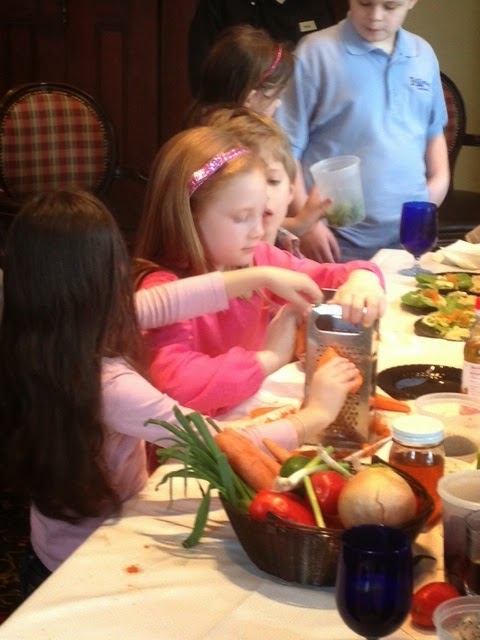
Including our kids and friends in meal preparation makes mealtime so much more fun and successful (photo by LivligaHome).

Today is National Food Day. There is nothing like a title that tells us we are all in this together. As I have learned and studied about healthy eating, weight management and our behavior related to changing our unhealthy habits it has become abundantly clear that it is nearly impossible to succeed in embracing a healthy lifestyle by doing it alone. The change has to be systemic. We have to involve everybody in our world from our family to our friends to our co-workers. We need to surround ourselves with a world that is supportive of good health and healthy habits. Good news is such a world is beneficial for everyone. As I have personally found, it is a world that is much more fun and joyful. I see a lot more smiles in the world I live in now.

The challenge is how do we get started. For me it was all about adopting small changes and sticking to them. For some it may work better to go for broke and make major changes all at once. It can be as easy as replacing sugary sodas with flavored waters. Or you may want to right size your food environment so you tackle your food portions altogether. The only way I know you can do this successfully is to right size your dishware-- which is why I created Livliga. I have now lost almost 60 pounds, and kept it off, just by right sizing my portions and going back to actual serving sizes.

Now that we have gotten started, how do we sustain the change? By making it an automatic habit. This means it has to be doable and repeatable. It also has to be enjoyable. Our attitude can make us or break us. As an example, my husband and I started eating oatmeal for breakfast about a year ago. It is just what we do. It makes preparing breakfast easy and fast. Either one of us can get it ready. It is healthy, tasty (we add dried cherries and nuts) and has helped lower our cholesterol significantly. We really enjoy this healthy habit.

One or two changes does not make a healthy lifestyle so how do we keep adding more healthy habits to how we go about living our lives? We have to take on the next challenge. Sometimes, literally taking on a challenge helps us with change. Think of how many people you know who are working on being healthy who start running 5Ks. Others may eliminate different foods in their diet to help them gain more control of their health. My husband and I recently agreed to not drink alcohol during the week and just savor it on the weekends to help us control calories. Instead we are exploring various hot teas. Totally fun. My current favorite is Moroccan mint. It has become a successful new change.

Being inclusive with our healthy habits and lifestyle is not only helpful to us but also to the others in our lives. Including our kids and friends in meal preparation makes mealtime so much more fun and successful. Recent studies show that by having our kids, for instance, choose which healthy food they want to try and then letting them participate in the preparation of the meal being made they are much more likely to try new foods and like them.

I came across a wonderful and informative YouTube video "Our super-sized kids" that shows how important it is to support our kids in adopting healthy habits. It also shows that successful change can only be achieved if everyone in the family gets involved. Embracing healthy eating and a healthy lifestyle is everyone's business.

Let's get up and get vocal about healthy eating wherever we live and eat. We deserve it!
0

Asking the Right Questions about Your Relationship with Food

Friday, March 21, 2014
Asking the Right Questions about Your Relationship with Food
To keep on track it is so important to keep asking ourselves questions and to keep checking in with ourselves about how we are doing. I call it the "pinch test". It is hard to always be present in our lives, especially when we eat. But if we are not present then it is easy to play games with ourselves about what we are eating and how much we are eating. Not being present also takes away from the enjoyment of our food and the ultimate satisfaction we get from good food and a good meal. If we can't get to satisfaction then we will never be able to succeed in living a healthier lifestyle.

Marc David, Founder of the Institute for the Psychology of Eating, recently posted an article that suggests some questions we should ask ourselves regarding us and our relationship with food. I found them very helpful. As he says, "Asking the right questions inevitably points us in a right direction." Here is what he wrote:

Here’s a suggestion: if you care about health, if you care about nutrition, if you care about good eating, then it’s a good idea to keep asking good questions.

Asking the right questions inevitably points us in a smart direction.

The greatest advances in science, technology, philosophy, art, and culture have so often come because somebody somewhere was asking the right questions.

Questions can be quite powerful.

 Who am I?
 What’s my purpose in this world?
 How can I reach my highest potential?
 How can I contribute?
 How can I find true love?
 What do I need to be happy?


Such questions activate the mind and guide the soul. They’re like fine tuned honing devices that help us access a greater wisdom.

So in the interest of having a healthier body, a well functioning metabolism, and a nourishing relationship with food – here are 5 powerful and important questions to ask yourself about you and food.

1.    Do I eat in the ideal state of digestion, assimilation, & calorie burning?
This is a foundational question that I consider one of the top two questions that anyone could possibly ask in the realm of eating and nutrition. That’s because we could be eating the healthiest food in the universe, but if we’re not eating under the ideal state of digestion, assimilation, and calorie burning – which happens to be the physiologic relaxation response – then we’re in no way getting the full nutritional value of our meal.  If we eat under stress, we’re excreting nutrients, digestion is impaired, hormones such as insulin and cortisol are secreted which can stimulate weight gain and de-regulate appetite, the function of healthy gut bacteria is impaired, and the list goes on and on. We are physiologically designed, by the brilliance of evolution and a higher wisdom – to be optimal processors of nutrition when we’re in the state of parasympathetic nervous system dominance – a fancy term for relaxation. Ask yourself this powerful question at every meal, and commit to techniques such as deep breathing, slowing down, taking time with food, and calming your mind – and you’ll officially be a nutritional superstar.

2.    Am I nutritionally flexible?
Being nutritionally flexible means that we’re willing to explore when it comes to food and diet. We live in a time when the nutritional landscape is changing rapidly. We re exposed to stressors, toxins in the environment, poor quality food, and all kinds of assaults on our immune system. It’s a good time to be flexible and experiment. Are you willing to try different supplements? If you’ve been a heavy meat eater for all your life, are you willing to go vegetarian for a while? If you’ve been vegetarian for a long time, and your health is suffering, have you considered eating high quality animal foods? Are you open to cleansing?  Would you consider going gluten-free for a few months? Switching to organic foods? Buying locally produced foods? Have you tried including more healthy fats in your diet? Do you try new foods? Nutritional flexibility gives us the greatest chance for long-term health and long-term survival. Plus it can be a lot of fun.

3.    Am I in my body?
This might be the hardest question to wrap yourself around. A lot of people eat well, exercise, and do good things for their body. However, it doesn’t necessarily mean that we are “in” the body. Another way to say this is that there are a lot of us walking around a bit “checked out” from the body. Such people are disembodied. This is a subtle distinction, but it has profound effects. When we’re checked out of the body, we’re not fully present, we’re not fully sensitive to body wisdom and body feedback, and the mind is always wandering somewhere else and not paying any attention to the thing that the body is doing in the moment. When you exercise, are you focused on your body or are you in your head? When you eat, do you focus at all on the food, or are you living inside your mind that’s chattering away? When you’re touching your loved one, or hugging your kids, are you really feeling them and truly embracing them? Fully embodying your life is a powerful practice and a metabolic game changer. Simply asking yourself, “am I in my body?” throughout the day helps us to embody. And the more we embody, the more metabolically powerful we become.

4.    Do I put love into the equation?
Good for you if you focus on good nutrition, good for you if you read up about health and healing, and congratulations for learning as much information as you can about food and eating. What I often see happen with people who have a solid interest in nutrition is they forget vitamin L – love. Love is the missing ingredient in a majority of weight loss diets and nutritional approaches, it’s a missing ingredient in the food industry, and it’s often absent in the offices of practitioners who help us with food and body. No matter what you eat, what kind of nutritional philosophy you adhere to, or what foods you think are the right ones for everyone to eat – if there’s no love in the equation, then our nutritional strategies are deficient. This is a great homework assignment for you: get creative about all the ways you can add more love into your relationship with food.

5.    How do I nourish the world?
Nutrition, food, and health are no longer a mere personal affair. How our food is grown, produced, marketed, and consumed impacts all of us. There are a lot of people out there who don’t have enough. There’s a lot of people out there who are lacking in education and understanding of good health. There’s far too much social and nutritional injustice in the world. So, how do you nourish the world? How do you give back to others? How do you share your good bounty? What goes around comes around. Nourish yourself, and nourish the world, and the best of who we are is automatically born.
 

See more at: http://psychologyofeating.com/5-important-questions-food/
0